
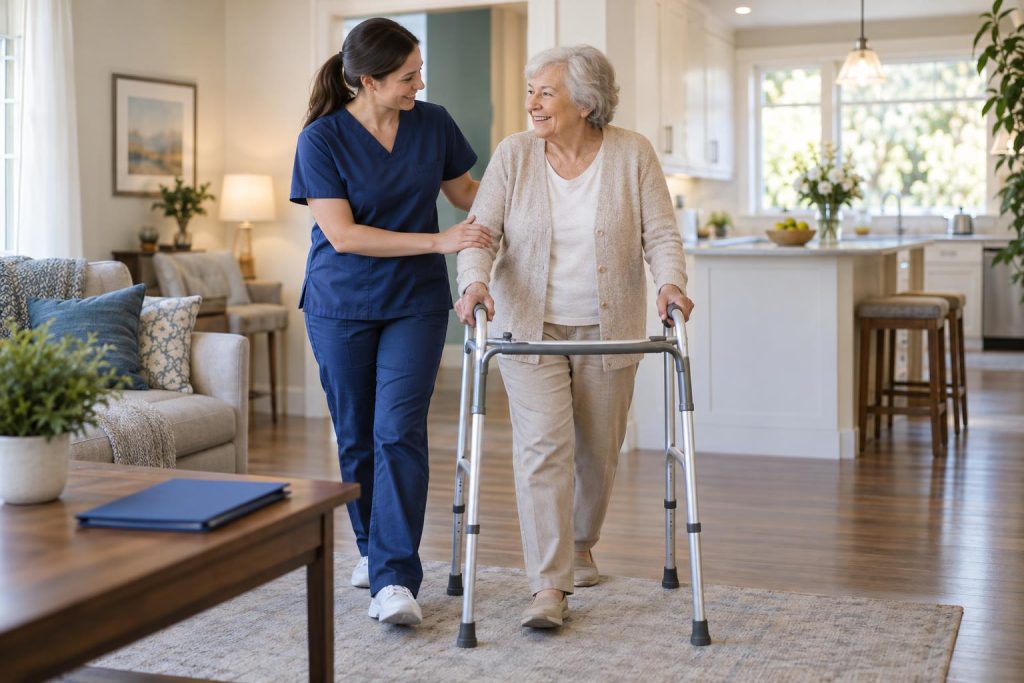
Understanding LPN Mobility Support at Home
Yes, a Licensed Practical Nurse (LPN) may be able to provide mobility support at home as part of an individualized care plan. The type and amount of assistance depend on the person’s daily routine, current abilities, comfort level, care directions, and the safety considerations involved. Mobility needs can also change over time, so it is important to discuss what support is needed rather than assuming one approach will suit everyone.
For many people, mobility support is not about taking over. It is about having a trusted, trained professional nearby to provide the right amount of help while encouraging the person to remain involved in the activities they can do comfortably. This can support independence, dignity, and confidence during everyday routines at home.
At Infinity Healthcare, in-home support is planned around the individual and their family. Before care begins, the team can learn about preferred routines, goals, the home environment, equipment already in use, and any instructions from the person’s healthcare providers. This helps determine whether an LPN is an appropriate member of the care team and what support can be provided safely within the agreed plan.
What Mobility Assistance May Include
Mobility support can look different from one household to another. Some people simply want reassurance while moving through the home. Others may need hands-on assistance with specific daily activities. An LPN’s role is guided by their professional scope, qualifications, the care plan, and the person’s individual needs.
Depending on these factors, support may include assistance with:
- Getting in and out of bed: Helping with a morning, evening, or rest-time routine in a respectful and unhurried way.
- Moving between surfaces: Providing assistance when transferring between a bed, chair, wheelchair, toilet, or other commonly used surface, when appropriate for the plan of care.
- Walking at home: Offering standby support, reminders, or appropriate physical assistance while a person walks through familiar areas of the home.
- Bathroom routines: Supporting safe, private movement to and from the bathroom as part of personal care and daily living assistance.
- Preparing for appointments or outings: Helping a person get ready to leave the home, including moving safely through entryways or to a vehicle when this is part of the care plan.
- Using mobility equipment: Following the agreed care directions for equipment a person already uses, such as a walker or wheelchair, and reporting concerns to the appropriate care contact.
Mobility assistance can be especially helpful when routines feel tiring, when a family caregiver needs a break, or when someone wants support to continue participating in daily life at home. The goal is to provide assistance that feels practical, respectful, and consistent with the person’s choices.
Different Levels of Support for Different Needs
Not every person needs the same kind of help. A personalized care plan may describe different levels of assistance based on the activity, time of day, and the person’s usual routine. Clear planning can help prevent confusion for both the client and family members.
- Standby assistance: The LPN remains nearby while the person completes an activity independently, offering reassurance or help if it is needed.
- Verbal cueing and reminders: Simple, calm prompts can help a person move through a familiar sequence, such as pausing before standing or using their usual mobility aid.
- Hands-on assistance: Where appropriate, the LPN may provide direct help with a planned transfer or movement task.
- Ongoing observation: The LPN can pay attention to changes that affect day-to-day mobility, such as increased fatigue, hesitation, discomfort, or difficulty completing a usual routine, and communicate relevant observations through the appropriate care channels.
The level of support should respect personal choice. Someone may prefer to complete as much of a task as possible on their own, with help only at certain points. Others may want consistent assistance during a specific routine. Discussing preferences openly helps ensure care feels supportive rather than intrusive.
How an LPN Fits Into a Home Care Plan
An LPN can be part of a broader in-home care plan that may also include personal care, home support, companionship, respite, or other nursing services. The right mix of support depends on what will be most useful for the individual and their family. For example, mobility assistance may be combined with help with dressing, bathing, meal routines, medication reminders, or accompaniment to an appointment.
Learn more about Infinity Healthcare’s personal care services, which can include support with daily living activities that are often connected to mobility routines. Families looking for practical help around the home can also explore home support services.
When nursing-related support is being considered, it is helpful to share as much relevant information as possible during the consultation. This may include the person’s usual routine, the type of assistance they currently receive, any equipment used in the home, and whether there have been recent changes that affect mobility. Infinity Healthcare can then discuss care options and help clarify the most appropriate team member for the requested support.
For a broader overview of the role, see what care tasks a Licensed Practical Nurse can perform. If support is needed after a hospital stay, this related guide explains how an LPN may help after hospital discharge.
Planning for Mobility Support Safely and Respectfully
Thoughtful planning matters because homes, routines, and mobility needs vary. During an initial conversation, the care team may ask about the layout of the home, commonly used rooms, stairs or entrances, preferred times for care, and how the person likes to receive help. These details can make support feel more comfortable and predictable.
It is also important to be open about any recent changes in a person’s ability to move around or complete usual activities. An LPN does not replace emergency services or other healthcare providers when urgent medical attention is needed. If there is a sudden or serious concern, families should seek appropriate urgent help. For non-urgent questions, the care team can discuss whether the existing plan should be reviewed or whether additional support may be useful.
Families may also benefit from considering how caregiver support fits into the plan. Consistent in-home assistance can give relatives time to rest, work, attend to other responsibilities, or simply spend time together without managing every part of a routine. Respite care can be an option for families who need flexible support while continuing to stay involved in their loved one’s care.
What to Discuss During a Consultation
A consultation is an opportunity to ask practical questions and make sure the care arrangement reflects the person’s wishes. Useful topics can include:
- Which daily movements or routines feel challenging, tiring, or less manageable than before?
- What level of help is preferred: someone nearby, verbal reminders, or more direct assistance?
- Are there specific times of day when mobility support would be most helpful?
- What equipment, if any, is used in the home?
- Who should be updated if there are changes in routine, comfort, or support needs?
- Would the family benefit from short-term help, regular visits, overnight support, or respite?
These conversations support a care plan built around real life, not a one-size-fits-all checklist. Home is where life happens, and practical mobility support can help people continue living on their terms with the assistance that feels right for them.
Infinity Healthcare provides personalized in-home care in Edmonton and surrounding communities. To discuss mobility needs, LPN support, or a care plan that supports independence at home, contact Infinity Healthcare to schedule a personalized consultation.

