
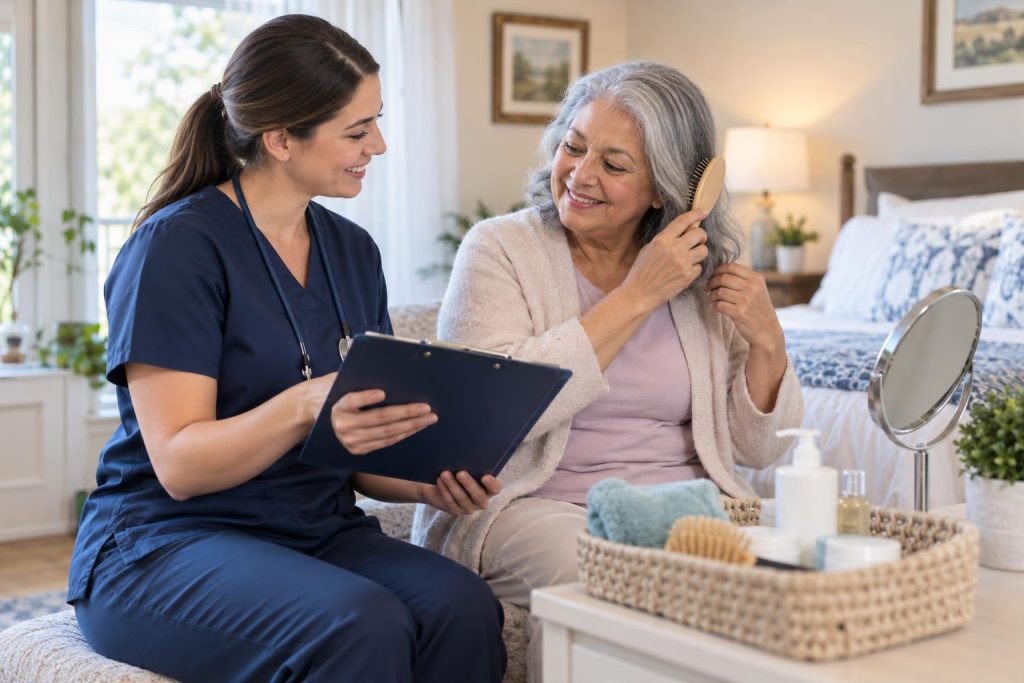
Understanding LPN Support With Daily Care at Home
Yes. A Licensed Practical Nurse, often called an LPN, may provide personal care at home when the requested support is appropriate to the nurse’s education, authorized role, assessment, and the individual care plan. Personal care means practical help with everyday routines, delivered in a way that respects the person’s preferences, privacy, dignity, and independence. For many Edmonton families, an LPN can be a helpful part of a personalized in-home support plan, particularly when daily assistance and nursing-informed observation are both needed.
The exact tasks an LPN provides are not the same in every situation. Care needs, the person’s health directions, the home-care plan, and applicable professional standards all matter. Before services begin, it is important to discuss the person’s routines, goals, mobility, communication preferences, family caregiver involvement, and any instructions from their healthcare team. This helps ensure the right type of provider is scheduled for the right support.
At Infinity Healthcare, care is planned around the person rather than asking the person to fit a fixed routine. The goal is to make day-to-day life at home more manageable while supporting personal choice and aging on your terms.
What Personal Care May Include
Personal care can look different from one household to another. Some people want support with one part of their morning routine, while others need more regular help throughout the day or overnight. When appropriate to the established care plan, an LPN may assist with personal care activities such as:
- Bathing, showering, grooming, oral care, dressing, and toileting
- Morning, evening, and bedtime routines that follow the person’s usual preferences
- Mobility support, transfers, repositioning, and encouragement to move safely within the home
- Meal and hydration support that fits the person’s established routine or instructions
- Medication reminders or medication-related assistance when it is authorized and appropriate to the LPN’s role and care plan
- Observing and documenting changes that should be shared with the client, family, or an appropriate healthcare professional
- Comfort-focused support for people with dementia, complex care needs, or palliative care needs
- Communication with family members and the broader care team, with the client’s consent
An LPN does not replace a physician, nurse practitioner, emergency service, or hospital care. LPNs do not diagnose conditions or independently change medical directions. If a concern arises that is outside the care plan or requires medical direction, the appropriate healthcare professional should be contacted. For an urgent or emergency health concern, families should seek emergency assistance.
When an LPN May Be a Good Fit
An LPN may be considered when personal care needs are connected to ongoing nursing considerations or when a family would benefit from a provider with practical nursing education as part of the in-home care team. For example, a person may need reliable help with personal routines while changes in comfort, mobility, appetite, skin condition, or overall well-being need to be noticed and communicated according to the plan.
That does not mean an LPN is necessary for every personal care visit. Many daily living tasks can be provided by trusted and trained caregivers. A caregiver may be a suitable choice for bathing assistance, dressing, meal preparation, companionship, light housekeeping, errands, and respite, depending on the individual’s needs. Matching the level of support to the task can help families create a practical plan that respects both care needs and budget.
For more information about everyday assistance, visit Infinity Healthcare’s Personal Care services. If you are exploring support that includes nursing-related needs, the Nursing Care page explains how nursing support may fit into an in-home plan.
How a Personalized Care Plan Helps
A clear care plan gives everyone a shared understanding of the support being provided. It can outline preferred routines, how the person likes to be assisted, mobility considerations, communication needs, family contacts, scheduling, and when the care team should report changes or questions. It should also reflect the person’s wishes wherever possible.
Care plans are not meant to be permanent. Needs may change after a hospital stay, during recovery, as a family caregiver’s availability changes, or when a person simply wants more or less help. Reviewing the plan regularly allows support to adapt without losing the consistency that helps a person feel comfortable at home.
Families are often concerned that accepting help will reduce independence. In many cases, the purpose of personal care support is the opposite: assistance can make it easier for someone to continue their preferred routines, conserve energy for the parts of the day that matter most, and remain involved in decisions about their own life. This person-centred approach is part of Infinity Healthcare’s Age Out Loud philosophy.
Questions Families Can Ask Before Arranging Care
It is reasonable to ask detailed questions before choosing an in-home care provider. Open communication can help prevent misunderstandings and create a smoother start to services. Consider asking:
- Which personal care tasks are included in the proposed plan?
- Would an LPN, caregiver, or a combination of providers best fit these needs?
- How are care preferences, mobility needs, and safety considerations documented?
- What happens if care needs change or a new concern is observed?
- How will the care team communicate with the client and family, and how is consent respected?
- Are short visits, extended shifts, overnight support, or 24/7 scheduling available?
- How can family caregivers receive respite while staying involved in care decisions?
Answers to these questions should be clear and tailored to the household, not based on assumptions. A thoughtful conversation also makes it easier to identify when other support may be helpful, such as respite care for family caregivers or broader home care and home support for daily living needs.
Related In-Home LPN Questions
Personal care is often only one part of an in-home plan. Depending on the person’s situation, families may also want to learn whether an LPN can provide mobility support, dementia care, palliative care at home, or overnight care. The right approach depends on the individual’s goals, the support required, and how responsibilities are coordinated among the client, family, caregivers, LPNs, and other healthcare professionals.
Planning Personal Care in Edmonton
Infinity Healthcare provides personalized in-home support for individuals and families in Edmonton. Whether care is needed for a few hours, on an overnight schedule, or as part of ongoing support, a conversation can help clarify what type of assistance may be appropriate. To discuss personal care at home and build a plan around daily life, contact Infinity Healthcare to schedule a personalized in-home care consultation.

