
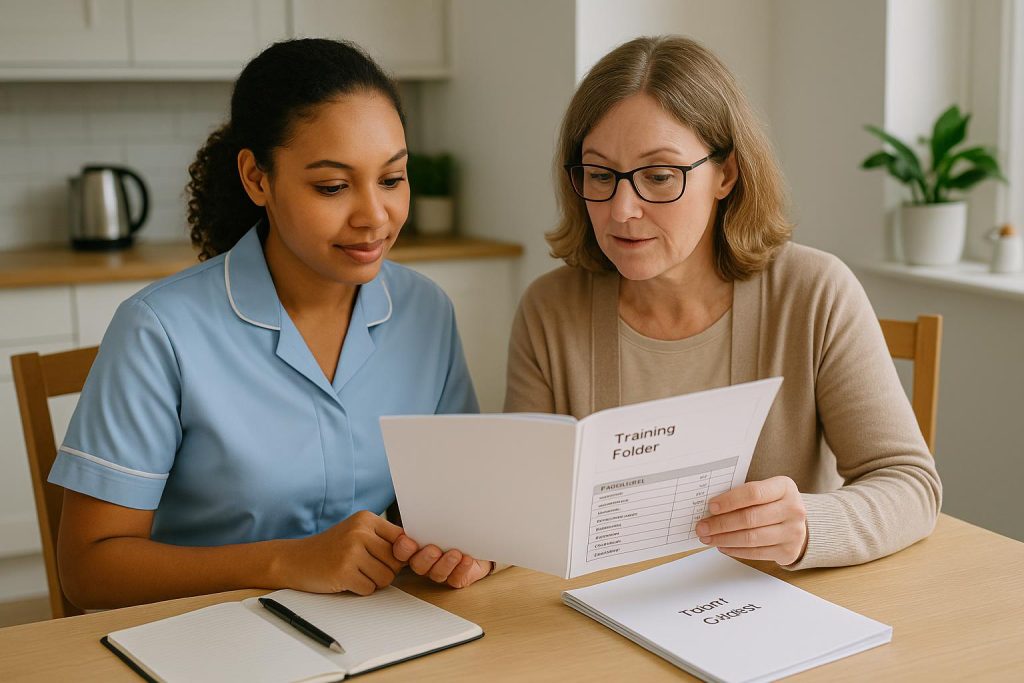
How care workers are prepared for in-home support
Care workers need a combination of relevant training, practical preparation, sound judgment, and personal qualities such as respect, patience, and clear communication. The exact qualifications needed can vary with the person’s needs, the duties being provided, and the requirements of the care role. For non-clinical home care, preparation commonly focuses on safe daily-living assistance, privacy, infection prevention practices, communication, mobility support, and person-centred care. When a client has more complex needs, the care agency should discuss what type of support is appropriate and how it will be coordinated.
At Infinity Healthcare, trained and screened caregivers provide personalized in-home support for people and families in Edmonton. The goal is not to take over someone’s life, but to provide dependable assistance that supports independence, dignity, personal routines, and choice at home. A thoughtful match between a caregiver’s preparation and a client’s care plan helps create a more comfortable, consistent experience for everyone involved.
Training for everyday home care tasks
Many care workers receive education or workplace training related to personal support and safe assistance in the home. This training helps them understand how to provide help respectfully while encouraging each person to do as much as they comfortably can for themselves. Caregivers should also understand the importance of consent, confidentiality, cultural preferences, and personal boundaries.
Depending on the services arranged, a caregiver may be prepared to assist with everyday routines such as:
- Bathing, grooming, dressing, and other personal care tasks
- Mobility assistance and safe transfers within the home, based on the individual’s needs and care plan
- Meal preparation, light housekeeping, laundry, and errands
- Medication reminders, where included in the care plan
- Companionship, conversation, activities, and accompaniment to appointments or outings
- Maintaining familiar routines and communicating changes or concerns through the appropriate care team channels
These supports are designed to make daily life more manageable, not to replace regulated medical assessment, diagnosis, or treatment. Families can learn more about assistance with daily routines through Infinity Healthcare’s Personal Care services and broader Home Care options.
Safety, hygiene, and emergency awareness
Safe care is an important part of caregiver preparation. Training may cover infection prevention, hand hygiene, recognizing hazards in the home, safe body mechanics, fall-awareness practices, and what to do when an unexpected concern arises. Care workers need to know the limits of their role, follow the care plan, and communicate promptly with a supervisor, family member, or the appropriate healthcare professional when a situation calls for additional direction.
It is reasonable for families to ask an agency how caregivers are prepared for emergencies and which qualifications are required for the services they need. The answer may differ for a companionship visit, personal care shift, overnight support, or a care arrangement involving nursing services. Asking early gives you a clear picture of how the agency approaches safety and escalation, while helping the care team understand what matters most to your family.
Experience and specialized care preparation
Formal training is valuable, but experience and ongoing learning matter as well. In-home care is personal: every household has different routines, communication styles, goals, and preferences. Care workers build practical skills by learning to listen, adapt their approach, and provide support in a calm, respectful way.
Some clients benefit from caregivers with additional preparation or experience related to dementia and cognitive support, palliative and comfort-focused care, mobility needs, or supporting children and families through FSCD services. Specialized preparation should be aligned with the client’s specific needs rather than assumed. For example, dementia support often benefits from caregivers who understand the value of consistency, familiar routines, patient communication, and a reassuring environment. Respite care may call for a caregiver who can step into established household routines while keeping family members informed.
Infinity Healthcare offers Respite Care and FSCD Care that can be tailored to family goals and routines. Where regulated clinical care is needed, Nursing Care may be the more appropriate service. A care coordinator can help clarify the difference and discuss the level of support that fits your situation.
Personal qualities are qualifications, too
Technical knowledge is only one part of quality home care. A capable care worker should also demonstrate empathy, reliability, professionalism, and respect for the person receiving care. They need to communicate clearly, arrive prepared for their shift, and recognize that the client’s home is their personal space.
Families often value caregivers who can balance helpfulness with independence. This might mean offering a steady arm during a routine, preparing a preferred meal, listening without rushing, or giving someone time to complete a task on their own. Respecting preferences around routines, privacy, language, food, faith, and social activities can make support feel more personal and less intrusive. This reflects the idea behind Age Out Loud: aging and receiving support can still be active, individual, and on your own terms.
What families should ask a home care agency
Choosing home care is a significant decision, and you do not need to know every credential before beginning the conversation. A reliable agency should be ready to explain its approach in plain language. Consider asking:
- How are care workers screened, trained, and supervised?
- What preparation do caregivers receive for the type of support we need?
- How do you match a caregiver to a client’s personality, routines, and preferences?
- How is the care plan developed, reviewed, and adjusted as needs change?
- Who should we contact if we have a question or concern outside a scheduled visit?
- How do caregivers communicate important observations while respecting privacy?
- When would nursing or another regulated healthcare service be considered?
These questions can help you compare providers based on transparency and fit, not simply on a list of credentials. You may also find it helpful to read what makes a good care agency before making a decision.
Matching support to the individual
There is no single qualification that covers every in-home care situation. The right caregiver and service arrangement depend on the individual’s abilities, preferences, schedule, home environment, and the kind of support requested. A personalized care plan provides a clear starting point by outlining the agreed-upon tasks, routines, communication preferences, and goals. It can also be updated as circumstances change.
For some people, a few hours of companionship or help around the home may be enough to maintain a comfortable routine. Others may need regular personal care, family caregiver relief, overnight support, or coordinated assistance alongside healthcare professionals. The important question is whether the care worker’s preparation and the agency’s oversight match the support being provided.
If you are looking for trusted in-home care support in Edmonton, Infinity Healthcare can discuss your needs and help you understand the available options. Visit the Services page or contact Infinity Healthcare to schedule a personalized conversation about care that supports independence at home.

