
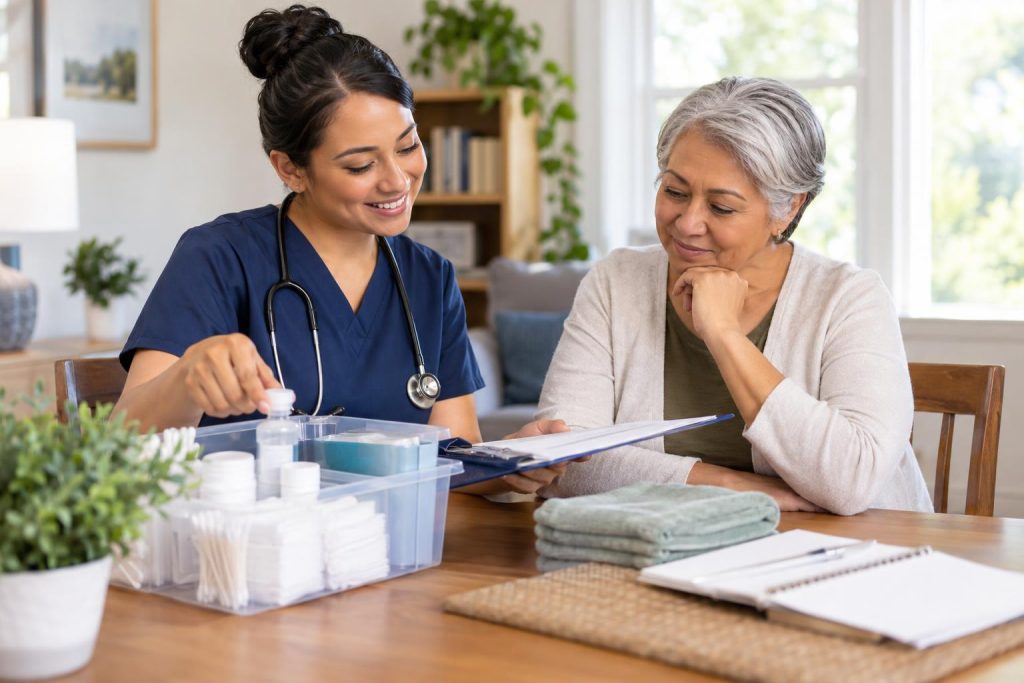
At-home nursing support for wound care
Yes. A Registered Nurse may be able to provide wound care at home when this support is appropriate for the person’s needs, the nurse’s professional scope, and the directions in place from the treating physician or other authorized health professional. For many people, receiving planned care at home can make daily life more manageable while preserving comfort, privacy, dignity, and personal choice.
Wounds vary considerably in cause, complexity, required supplies, and the level of monitoring involved. For that reason, home wound care should be individualized rather than approached as a one-size-fits-all service. A Registered Nurse can review the information available, work within an established care plan, and coordinate with the appropriate members of the healthcare team when questions or changes arise.
Infinity Healthcare provides nursing care at home in Edmonton and surrounding communities. A conversation with the care team can help clarify whether in-home Registered Nurse support may fit your situation, what information is needed to plan care, and how services can work alongside existing medical instructions.
What a Registered Nurse may help with
The exact role of an RN depends on the wound, the authorized plan of care, and the person’s overall health needs. Where appropriate, Registered Nurse wound care at home may include the following:
- Reviewing the wound and the surrounding skin for visible changes that may need to be shared with the treating healthcare professional.
- Cleaning the area and changing dressings in accordance with the established care plan and applicable directions.
- Supporting the use and organization of wound-care supplies identified in the plan.
- Documenting relevant observations and communicating with the client, family, and care team with appropriate consent.
- Providing practical education for family caregivers about the planned routine, hygiene, supplies, and questions to raise with the healthcare team.
- Helping the person stay comfortable during care through respectful positioning, mobility support, and attention to their usual routines.
- Identifying when a concern should be escalated to the physician, nurse practitioner, clinic, or other appropriate provider.
An RN’s involvement does not replace the physician or specialist directing a person’s medical care. It also does not mean every wound can or should be managed at home. The care plan may need to change as the person’s needs change, and some wound concerns require assessment in a clinic, urgent care setting, or hospital.
How in-home wound care is planned
Before services begin, it is helpful to share the instructions already provided by the person’s physician, hospital team, wound clinic, or other authorized professional. This may include details about the dressing schedule, prescribed products, activity or bathing guidance, follow-up appointments, and who to contact with concerns. If the person has recently left hospital, clear discharge information can help support a smoother transition home. You may also find it helpful to read about how a Registered Nurse can help after hospital discharge.
During an initial discussion, the care team may ask about the type and location of the wound, the current dressing routine, mobility needs, other supports in the home, and the client’s preferences. These questions are intended to understand the requested support and determine whether services can be safely arranged within the available care plan. They are not a substitute for medical diagnosis or urgent assessment.
Care can then be scheduled around the individual’s needs and routines where possible. Some people need short-term nursing support while they follow a discharge plan; others may need ongoing coordination as part of a broader home-care arrangement. The goal is clear, consistent support that helps the person continue living at home on their terms.
Support around the nursing visit
Wound care is often only one part of what a person or family is managing. Everyday tasks such as bathing, dressing, meal preparation, keeping the home organized, or moving safely around the house can feel more difficult when someone has limited mobility or needs to protect a healing area. In addition to nursing support, Infinity Healthcare can discuss personal care and home support that may complement an established care plan.
These services are supportive rather than a replacement for medical direction. Trusted and trained caregivers may assist with daily routines, personal care, light housekeeping, meal preparation, companionship, and mobility support, as appropriate to the client’s plan and preferences. Coordinating practical help around nursing visits may reduce pressure on family caregivers and make it easier to maintain familiar routines at home.
Family involvement is welcome when the client wishes it. With consent, families can be included in communication about the scheduled routine and practical support needs. This collaborative approach respects the client’s choices while helping everyone understand their role. For family members who need time to rest, work, or manage other responsibilities, respite care may also be worth discussing.
When to seek prompt medical advice
Home nursing support is not emergency care. Follow the instructions you have received from the treating healthcare professional, and seek timely medical advice if there are new or worsening concerns. Examples can include significant bleeding, fever, severe or increasing pain, rapidly spreading redness, unusual drainage or odour, new swelling, a wound that opens unexpectedly, or a general decline in how the person is feeling.
If symptoms appear severe or urgent, contact emergency services or seek urgent medical help rather than waiting for a scheduled home visit. If you are unsure what to do, contact the person’s physician, nurse practitioner, wound clinic, or another appropriate healthcare provider for guidance. Acting on concerns promptly can help the healthcare team determine the next appropriate step.
Questions to ask before arranging care
A few practical questions can help families decide whether Registered Nurse wound care at home is the right fit:
- What care instructions are currently in place? Have the discharge papers, physician directions, and dressing information available if possible.
- How often is support needed? Consider dressing schedules, follow-up appointments, and whether the person needs help between nursing visits.
- Who is coordinating medical care? Knowing the appropriate clinic or provider to contact helps keep communication clear.
- What support does the person want at home? Personal routines, privacy, cultural preferences, and family involvement should all be respected.
- Are there additional daily-living needs? Help with meals, hygiene, mobility, or caregiver relief may be useful alongside nursing services.
Every situation is different, and the most appropriate support depends on the individual and their authorized plan of care. To discuss Registered Nurse wound care at home in Edmonton, or to explore a personalized combination of nursing and in-home support, contact Infinity Healthcare. The team can listen to your needs, explain available options, and help you take the next step with clarity and confidence.

