
How to Choose a Monitoring Solution That Supports Safe, Independent Living
The best monitoring system for an older adult is the one that fits their daily routine, health needs, home environment, and personal comfort with technology. There is no single device or service that is right for every family. A simple emergency pendant may be enough for one person, while another may benefit from home sensors, medication reminders, regular caregiver visits, or a combination of these supports.
The goal is not to take away independence. A well-chosen senior monitoring system can help an older adult continue aging on their terms while giving family members greater peace of mind. It should be easy to use, respectful of privacy, and connected to a clear plan for what happens when help is needed.
Start With the Person, Not the Product
Before comparing medical alert systems, fall detection devices, or smart home technology, consider what support would be most useful in everyday life. Include the older adult in the conversation whenever possible. Their preferences matter: a device that feels uncomfortable, confusing, or intrusive is less likely to be used consistently.
It can help to discuss recent changes, current routines, and the kind of independence the person wants to maintain. For example, someone who is active in the community may prefer a lightweight wearable alert button. Someone who spends most of their time at home may find motion sensors or a voice-activated device more helpful. A person who needs support with bathing, meals, or mobility may benefit from both technology and reliable in-person care.
Key questions to consider include:
- Has the person had a recent fall, near fall, or trouble getting up after sitting or lying down?
- Do they live alone, and how often does someone check in?
- Would they reliably wear a pendant, watch, or other device?
- Do they need reminders for medication, meals, hydration, or appointments?
- Are memory changes making it harder to follow routines or use a phone?
- Is there a family member or neighbour who can respond locally if an alert occurs?
- Would regular companionship or hands-on help reduce day-to-day stress?
Common Types of Monitoring Systems for Seniors
Many options are available, from basic emergency buttons to connected home systems. Understanding the main types can help families choose a practical setup without paying for features they do not need.
Personal emergency response systems (PERS) are among the most familiar choices. These often include a button worn as a pendant or wristband. When the person presses it, the service contacts an emergency response centre, a family member, or another chosen contact. Some systems work only inside the home, while mobile models can work away from home using cellular service.
Automatic fall detection is offered with some wearable devices. The device may detect a sudden movement followed by lack of motion and send an alert if the user does not cancel it. This can be useful for people at higher risk of falls, but it is important to understand its limits. No fall detection feature can identify every fall or emergency, so the person should still be encouraged to press their help button whenever they can.
Home sensor systems use devices placed around the home to notice patterns, such as motion in hallways, a door opening, or a lack of movement during usual waking hours. Some systems can send updates to family members. These systems may suit someone who does not want to wear a device, but families should speak openly about privacy and decide together which areas of the home, if any, should be monitored.
Medication reminder tools can provide audible prompts, flashing lights, locked pill dispensers, or app-based notifications. They may support routine, but they do not replace a pharmacist, physician, or caregiver review when medications become complex. If doses are being missed or taken twice, more direct support may be needed.
Smart speakers, video calling devices, and voice assistants can make it easier to call family, set reminders, control lights, or ask for help without reaching a phone. They can be valuable for connection and convenience, especially when set up in simple language. However, they depend on reliable power, internet, and the person’s ability to use voice commands or prompts.
Features That Matter Most
When comparing the best medical alert system or home monitoring system for elderly loved ones, focus on features that solve a real problem. More technology is not always better. The strongest choice is often the simplest system the person will use every day.
- Ease of use: Buttons should be large, clear, and easy to press. Charging, testing, and wearing the device should fit naturally into the person’s routine.
- Response plan: Know exactly who receives an alert and what they will do. Some services contact a monitoring centre first; others contact family directly.
- Coverage: Confirm whether the system works only at home, in the yard, while travelling, or throughout the community.
- Battery and backup: Ask how often the device needs charging and whether the base unit works during a power outage.
- Water resistance: Because many falls happen in the bathroom, a wearable device should be suitable for use near water if the manufacturer permits it.
- Clear costs: Review equipment fees, monthly monitoring fees, cancellation terms, and any extra charges for fall detection or mobile coverage.
- Privacy: Choose only the monitoring features the person is comfortable with, and make sure they understand who can access alerts or information.
Why Technology Works Best Alongside Human Support
Monitoring technology can send an alert, but it cannot prepare a meal, notice a gradual change in mood, help with a safe shower, or provide meaningful conversation. For many older adults, the most effective plan combines a senior monitoring device with regular check-ins from family, friends, or trained caregivers.
In-person support adds an important layer of observation and connection. A caregiver may notice that groceries are not being used, laundry is piling up, mobility has changed, or a person seems less steady than usual. These small signs can help families respond early and adjust support before daily tasks become overwhelming.
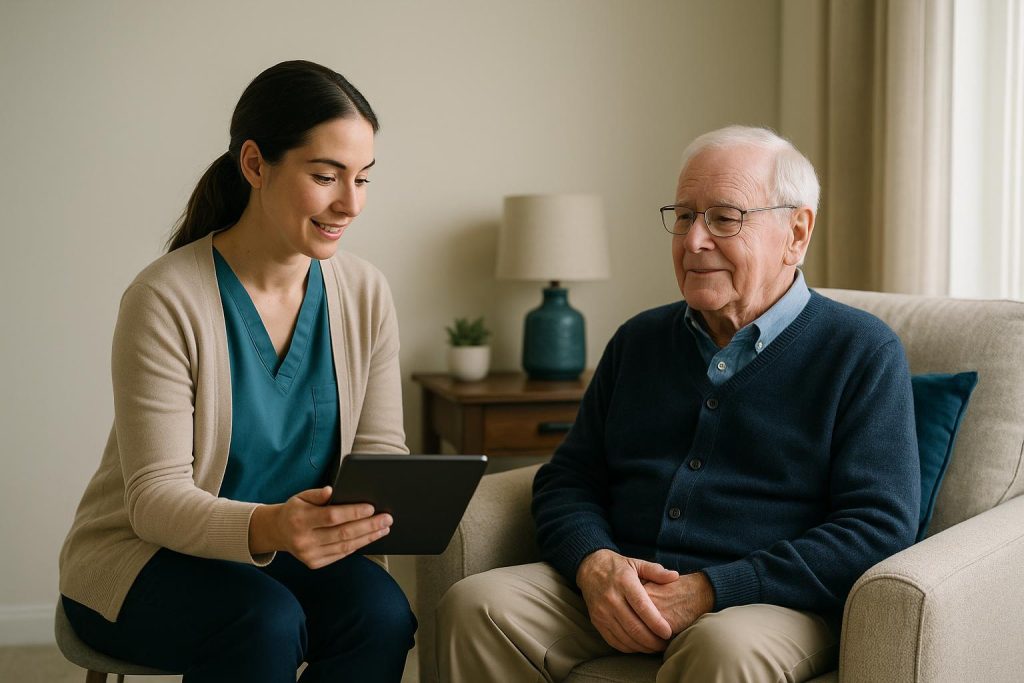
Flexible home care support can help with meal preparation, light housekeeping, errands, companionship, and medication reminders. For people who need assistance with routines such as bathing, dressing, grooming, or mobility, respectful personal care can complement an emergency alert system and support comfort at home.
Caregivers can also help make sure monitoring tools are being used as intended. They may check that a pendant is charged and worn, test the button when appropriate, confirm emergency contacts are current, and discuss any concerns with the family. This approach supports safety while keeping the older adult involved in decisions.
Create a Plan for Alerts and Emergencies
A monitoring system is only as helpful as the plan behind it. Once a device is chosen, write down what should happen if an alert is triggered. Share the plan with the older adult, family members, neighbours, and caregivers who may be involved.
- Keep emergency contacts current and list them in the order they should be called.
- Decide who has a key or approved access to the home if the person cannot answer the door.
- Post the home address and important health information where it is easy to find.
- Test the system based on the provider’s instructions, including the speaker or connection to the response centre.
- Review the plan after a fall, hospital visit, move, major health change, or change in caregivers.
It is also wise to avoid relying on one tool alone. A charged phone, clear emergency contact list, well-lit walking paths, and regular check-ins can all add reassurance. If a person is at immediate risk or has a serious emergency, call 911.
When It May Be Time to Add More Support
A monitoring system may need to be updated when needs change. Signs that it may be helpful to add more support include repeated falls, missed meals or medication, increasing isolation, difficulty with personal routines, confusion about how to use devices, or growing strain on a family caregiver. These changes do not mean independence is over. They can be a prompt to build a more personalized plan that makes living at home feel safer and more manageable.
Families may also consider respite care when a relative has been providing most of the check-ins and support. Short-term or regular respite can give family caregivers time to rest while their loved one receives consistent assistance and companionship.
A Balanced Approach Brings Greater Peace of Mind
The best monitoring system for the elderly is one part of a wider support network. Choose technology that is easy to use and matches the person’s priorities, then pair it with regular human connection and a clear emergency plan. This balanced approach can help older adults remain confident at home while giving families reassurance that support is available when it is needed.
If you are unsure which combination of monitoring and in-home assistance would fit your family, reviewing available in-home care services with a professional care provider can be a helpful next step. A personalized plan can respect personal choice, adapt over time, and help your loved one continue living fully at home.

